
Deep learning for business becomes easier to grasp when a camera must spot a fault that a spreadsheet cannot describe.
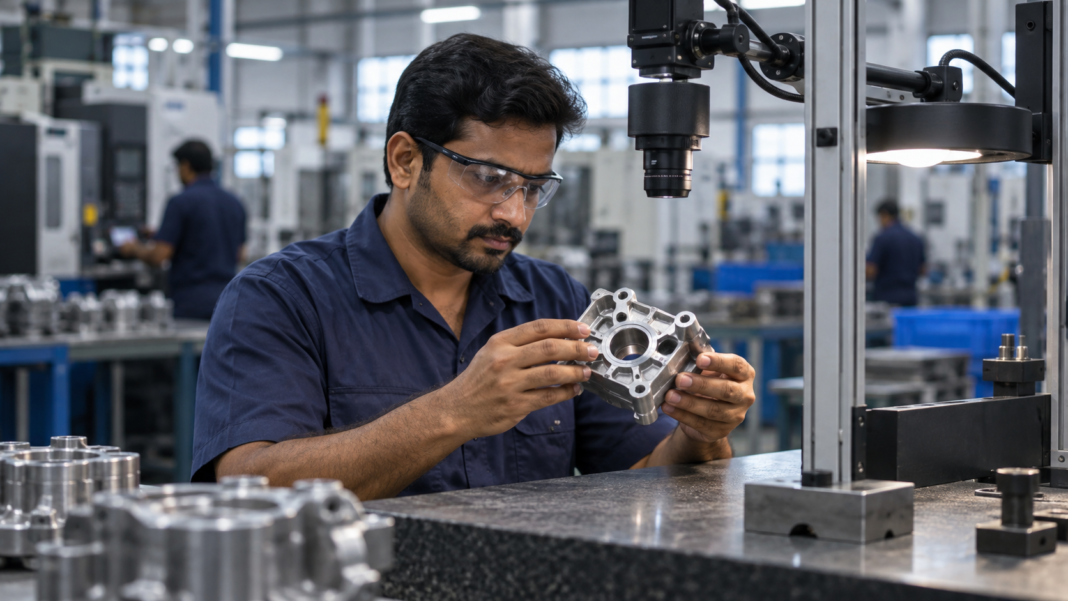
Consider a hypothetical auto-parts factory in Pune. Inspectors check metal surfaces for cracks before each batch leaves the plant. A supplier shows the quality manager a model that flags defects in photos. The demo looks convincing, but the manager has a harder question: will it work on the night shift?
That question matters because the camera, lighting, and parts may differ from the demo. Before buying the system, the team needs to understand what it learned and where it might fail.
What deep learning for business actually means
Deep learning is a branch of machine learning that uses neural networks with many layers. Each layer applies calculations to its inputs and passes results onward. During training, the model adjusts its internal settings to improve its answers. IBM’s explanation of deep learning describes this layered structure.
For an image task, these layers can learn useful visual patterns from examples. Teams therefore need not write a separate rule for every possible crack shape. However, people still define the task and judge whether the results meet its needs.
A model that flags a defect also has a narrower job than an inspector. It may recognize a visual pattern without knowing why the part failed or whether the batch needs further checks.
Deep learning also supports speech recognition and many language tools. Yet it doesn’t always generate content. A system that sorts images into “pass” and “review” can use deep learning without writing a single sentence.
If the broader distinction is unclear, start with our guide to machine learning for business.
Choose a task that needs this approach
Images and sound contain details that can be hard to capture in simple rules. A scratch may vary in shape, while the same spoken word can sound different across speakers. These are sensible areas to explore deep learning for business.
However, begin with the work itself. If the factory only needs to check a part’s width, a suitable gauge might solve the problem. A camera model adds little value when a direct measurement already gives a reliable answer.
Ask the supplier to show exactly what the system returns. Does it flag the whole image, mark a suspect area, or name a defect? Each output supports a different inspection process.
For example, a highlighted patch can help an inspector locate a flaw. A simple rejection flag may still leave that person searching the entire surface. As a result, two systems with similar test scores could create very different workloads.
For a speech project, make the same distinction. Turning calls into text is one task; deciding whether an agent handled a complaint well is another. Test each claim separately before buying a bundle of features.
You may not need to train from scratch
A supplier may start with a pretrained model. That model has already learned patterns from another dataset, so your firm can build on that work.
Transfer learning reuses some of that earlier learning for a new task. For instance, a team can keep a model’s learned visual features and add a new classifier. This component learns to assign images to categories, such as pass or review.
Fine-tuning goes further by adjusting some existing model layers. TensorFlow’s transfer learning tutorial explains both approaches.
For deep learning for business, this distinction changes the buying conversation. Ask whether the proposal covers an existing service, a model adapted to your data, or training from scratch. The answer affects the work you must fund and maintain.
However, reuse does not prove local suitability. A model trained on general photos may still need substantial work to spot your factory’s defects. Ask what evidence supports the proposed approach before accepting claims about speed or savings.
Also clarify what leaves your premises. If the system sends images or recordings to a cloud service, establish retention and access terms. Check whether the supplier may reuse those files for training.
Testing deep learning for business on your own data
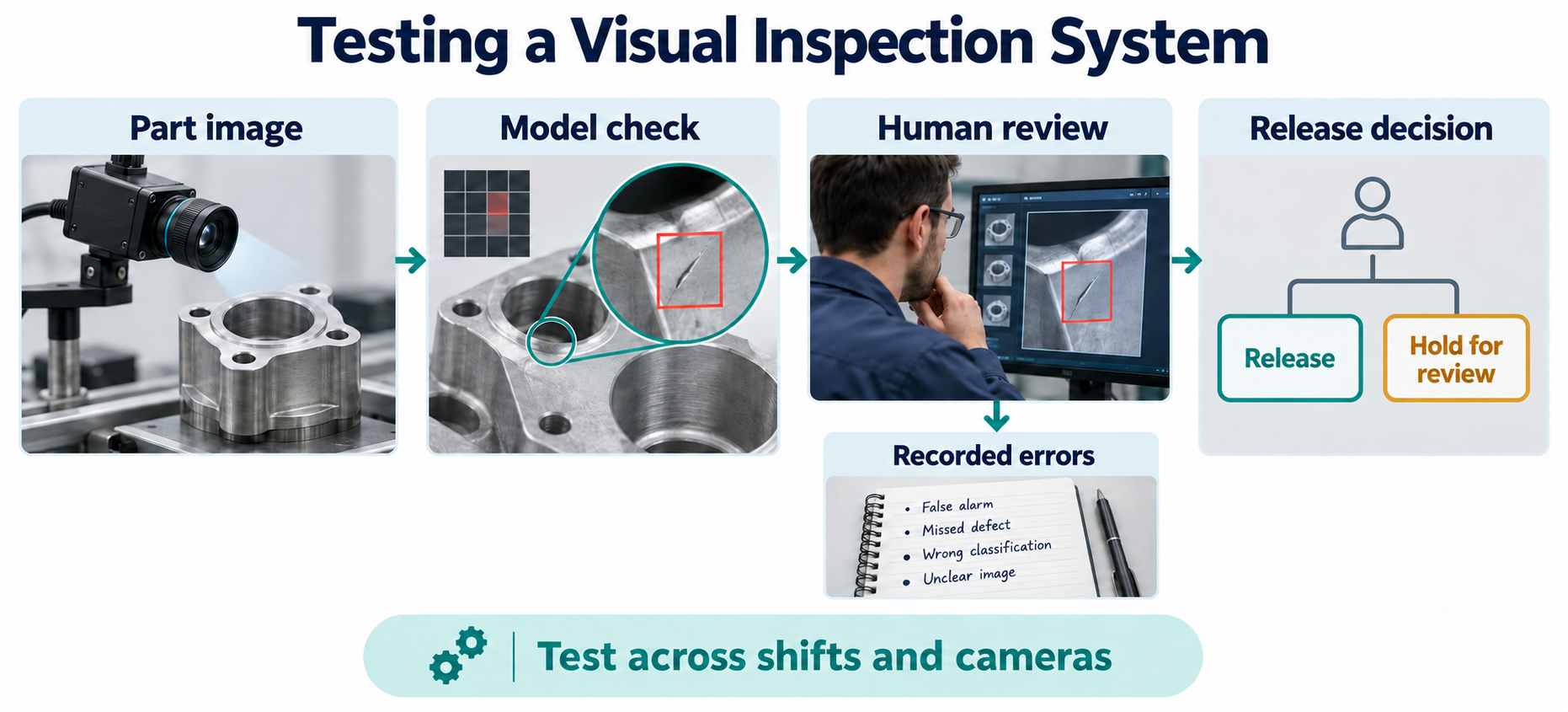
Return to the Pune factory. Its test should include the conditions in which staff will actually use the system. Ask for samples from different shifts and cameras, including the awkward cases inspectors find difficult.
First, agree on the labels. If two experienced inspectors disagree about whether a mark counts as a defect, resolve that dispute. Otherwise, the team cannot judge the model against a stable standard.
Next, keep a final test set apart from the examples used to build and tune the model. Google’s guidance on training, validation, and test sets explains why these sets need distinct roles. Repeatedly tuning against the final test weakens its value as an independent check.
For this factory, ask the team to avoid near-identical shots of the same part across those sets. Then review failures by shift and defect type. One overall score can hide poor results on a particular shift.
A missed crack and a needless rejection have different costs. Record both, alongside the time inspectors spend reviewing alerts. Before expanding the trial, the quality manager should set acceptable limits for each.
Our AI data readiness guide covers the ownership and quality questions to settle before collecting more examples.
Budget for the work after the demo
The model is only part of a working inspection system. Someone must keep cameras clean and check that each image matches the correct part. Staff also need a clear response when the service fails or produces an unclear result.
For a first trial, keep a qualified inspector responsible for release decisions. Give that person a way to record corrections and escalate recurring errors. Then include this review time in the business case.
Ask the supplier to price the full service, including image capture, support, and future model updates. Also check response time at the expected production volume. A correct answer that arrives after the part has passed the sorting point may be of little use.
Finally, agree on triggers for a fresh test. A new camera or a change in surface finish should prompt review before the team trusts previous results.
The useful starting point for deep learning for business is a specific task with evidence you can inspect. Ask for results under your own operating conditions and a workable review process. Then compare the full cost with today’s method.
For the wider adoption context, read our enterprise AI guide for business leaders.

